 Send Inquiry
 Send SMS
 Call Me Free


 Send Inquiry
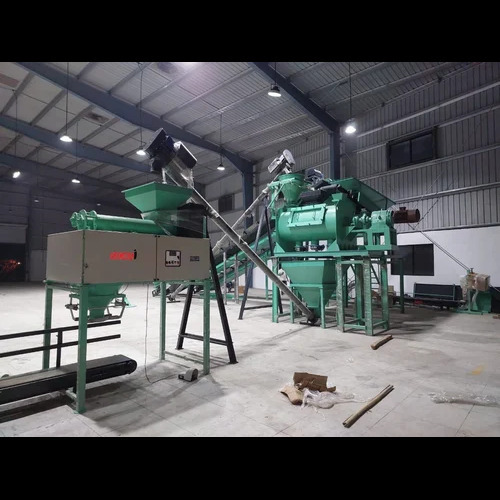
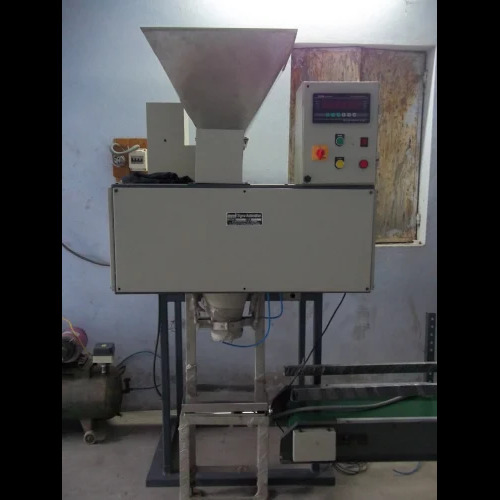
Auto Filling and Weighing Systems
Price 594000 INR/ Unit
MOQ : 1 Unit
Auto Filling and Weighing Systems Specification
- Input Power
- AC 220V/380V
- Product Type
- Auto Filling and Weighing Systems
- Material
- Mild Steel
- Dimension (L*W*H)
- 1800 x 850 x 2200 mm
- Sealing Type
- Heat Seal
- Power
- 3 HP
- Weight
- Approx. 450 Kg
- Filling Capacity
- 10-50 Kg
- Electric Current Type
- AC
- Packaging Material
- Plastic, Woven, Paper Bags
- Driven Type
- Electric
- Machines Type
- Weighing & Filling Machine
- Control System
- Digital PLC Control
- Production Capacity
- 200-800 Bags/Hour
- Voltage
- 220-380 Volt
- Automatic Grade
- Semi-Automatic,Automatic
- Condition
- New
- Accuracy
- 0.2%
- Hopper Capacity
- 100-300 Liters
- Feeding Mechanism
- Screw & Belt Conveyor
- Display Type
- Touch Screen Display
- Operating Temperature
- 0~45C
- Application
- Granular and Powder filling
- Noise Level
- 70 dB
Auto Filling and Weighing Systems Trade Information
- Minimum Order Quantity
- 1 Unit
- Supply Ability
- 20 Units Per Month
- Delivery Time
- 1 Week
About Auto Filling and Weighing Systems
To meet our clients' diverse needs, we offer an extensive range of Auto Filling and Weighing Systems. Our commitment to innovation has driven us to design and develop these products using cutting-edge technologies. We prioritize the use of superior-quality raw materials to manufacture these items in line with the evolving market requirements.
Key Features:
- Exceptional Efficiency: Our systems are designed for high-performance and efficiency, ensuring rapid and accurate filling and weighing processes.
- Low Maintenance: We understand the importance of hassle-free operations, which is why our systems are engineered for minimal maintenance, reducing downtime.
- Robust Construction: These systems are built to last, featuring durable construction to withstand rigorous industrial environments.
Technical Specifications :
- Brand : Sigma
- Weight : 660 KG
- Automation Grade : Automatic
- Filling Range : 20 TO 50 KG
- Frequency : 50HZ
- Air Consumption : 6 CFM
- Machine Type : Semi-Automatic
- Filling Material : Granules
- Voltage : 440
- Power Consumption : 7.5 HP
- Capacity : 250 BAG/HOUR
- Weight : 660 KG
- Automation Grade : Automatic
- Filling Range : 20 TO 50 KG
Precision Control and Efficiency
Our filling and weighing machines offer 0.2% accuracy supported by a touch screen display and digital PLC, enabling swift configuration and monitoring. The screw and belt conveyor ensure versatile support for both powders and granules, maintaining consistent output even with different bag materials and sizes.
Robust Design and Versatile Application
Built with durable mild steel and housed in a compact footprint (1800 x 850 x 2200 mm), these machines are well-suited for manufacturers handling a range of packaging materials, including plastic, paper, and woven bags. The system efficiently processes heavy workloads with a capacity ranging from 10 to 50 kg per filling and can meet high-volume requirements of up to 800 bags per hour.
User-Friendly Operation and Low Maintenance
The intuitive touch screen interface streamlines operations by minimizing manual inputs. With its noise level maintained at or below 70 dB and reliable electric operation (3 HP, 220-380V AC), the machine delivers a smooth production process while simplifying maintenance procedures.
FAQ's of Auto Filling and Weighing Systems:
Q: How does the touch screen display enhance the operation of the filling and weighing system?
A: The touch screen display provides an intuitive and interactive interface for operators, simplifying parameter input, real-time monitoring, and adjustments. It streamlines the filling and weighing process, reduces chances for human error, and increases operational efficiency.Q: What types of materials and bag sizes can this system handle?
A: This system is designed for granular and powder products, supporting packaging in plastic, woven, or paper bags. It accommodates bag sizes with filling weights between 10 and 50 kg, making it highly versatile for multiple industrial applications.Q: When is the best time to use a screw conveyor feeding mechanism versus a belt conveyor?
A: The screw conveyor is ideal for fine powders and cohesive materials, ensuring accurate dispensing and minimal spillage, while the belt conveyor suits free-flowing or larger granules, offering gentle handling for fragile contents. Selecting the mechanism depends on the product's consistency and flow characteristics.Q: Where can this auto filling and weighing system be installed?
A: Thanks to its compact dimensions and moderate weight, the system can be installed in industrial production lines, warehouses, or packaging plants. Its operational noise level (70 dB) and electric control design make it suitable for a wide range of commercial environments.Q: What benefits does the PLC control system provide?
A: The digital PLC control system offers precise regulation, automated filling cycles, and consistent performance. It allows for easy parameter adjustments, system diagnostics, and error detection, enhancing the system's productivity and reducing downtime.Q: How does automatic or semi-automatic operation affect productivity?
A: Automatic operation maximizes throughput by reducing manual interventions, ideal for high-output demands. Semi-automatic modes permit operator involvement for customized tasks, offering flexibility. Both modes contribute to efficient production and consistent sealing using the integrated heat seal mechanism.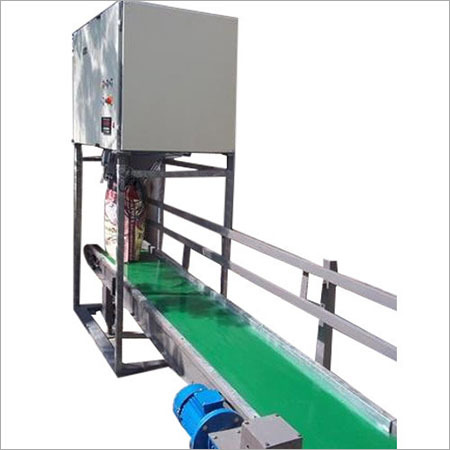
Tell us about your requirement

Price:
Quantity
Select Unit
- 50
- 100
- 200
- 250
- 500
- 1000+
Additional detail
Mobile number
Email

More Products in Automatic Bag Filling System Category
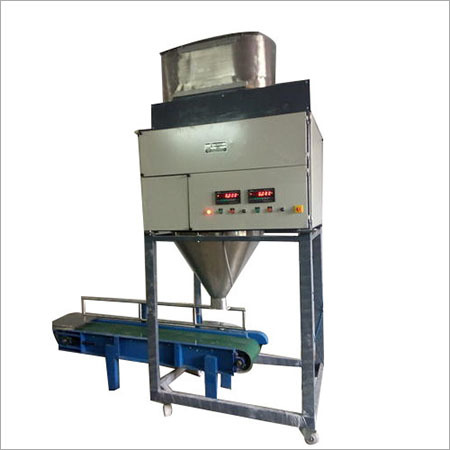
Mix Mortars Bag Filling System
Price 402000 INR / Unit
Minimum Order Quantity : 1 Unit
Filling Capacity : 20 kg to 50 kg per bag
Automatic Grade : Manual
Voltage : 440 V AC Volt (v)
Power : 4 HP
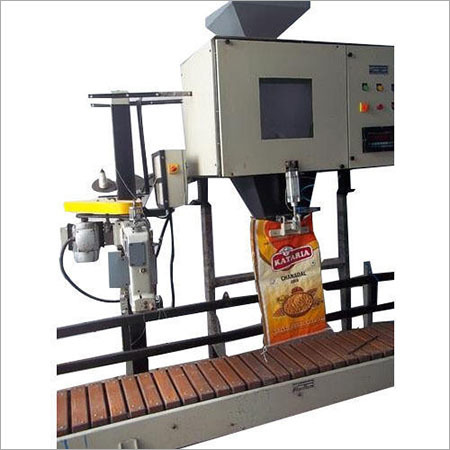
Bag Filling Stitching with Conveyor System
Price 588000.00 INR / Unit
Minimum Order Quantity : 1 Unit
Filling Capacity : 1060 kg/bag
Automatic Grade : Automatic,SemiAutomatic
Voltage : 220440 V
Power : 2030 W Watt (w)
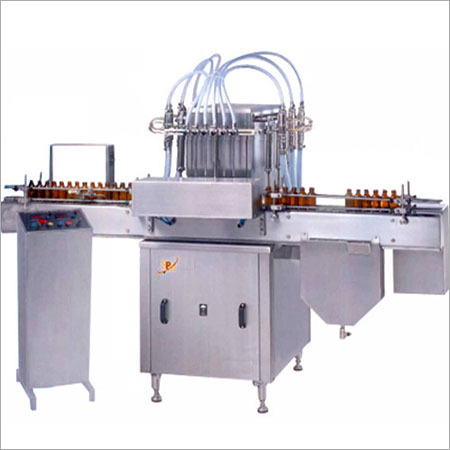
Online Filling Machine
Price 350000 INR / Unit
Minimum Order Quantity : 1 Unit
Filling Capacity : 1 to 5 Kg/hr
Automatic Grade : Automatic
Voltage : 230 V AC Volt (v)
Power : 1.5 kW
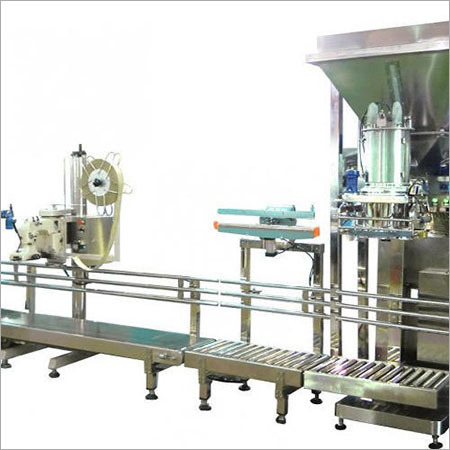
Mineral Powder Filling Machine
Price 474000 INR / Unit
Minimum Order Quantity : 1 Unit
Filling Capacity : 5 g to 500 g (customizable)
Automatic Grade : SemiAutomatic,Automatic
Voltage : 400 Volt (v)
Power : 2.5 kW

Contact Details

- 25, Shreenathji Estate, Vatva, GIDC, Phase-1, Near BSNL Exchange,Ahmedabad - 382445, Gujarat, India
- Phone : 08045815515
- Send Inquiry
- Whats App No. : +919825554349
Ms. Illa Patel (Marketing Head)
Mobile No. : +919376142921
 Send Inquiry
- Mr Naresh Patel (Proprietor)
- Mobile : 08045815515
|



 |
SIGMA INSTRUMENTATION
All Rights Reserved.(Terms of Use) Developed and Managed by Infocom Network Private Limited. |
